IT law for software, SaaS, cloud and IT projects
For software companies, IT service providers and users – SaaS and cloud contracts, IT projects and disputes.
Steering contracts, service specifications, SLAs and IT projects on a sound legal basis
ITMR Rechtsanwälte is a law firm for IT law with Fachanwälte für IT-Recht (certified specialist lawyers for IT law) and advises companies throughout Germany. From Düsseldorf, we support you when a software contract is being negotiated, a SaaS or cloud model is about to go live or a project is already visibly getting out of step.
Then you need a legal line that takes effect quickly and holds up under pressure. In IT law, it often becomes clear early on whether performance, remuneration, rights, support, security and exit are regulated in a stable way. Otherwise, open points later turn into an expensive conflict.
The focus is on commercially relevant IT projects: software development, platforms, cloud set-ups, digital products, provider changes, rights of use, project management, outsourcing and disputes. This is exactly where the legal structure must not only be formally sound but actually manageable in day-to-day business.
An overview of all digital focus areas of our firm, from IT law and data protection to AI, can be found on the page IT law and digitalisation.
Responsible for content: Jean Paul P. Bohne, Fachanwalt für IT-Recht (certified specialist lawyer for IT law), AI Officer (DEKRA), reviewed on 23 October 2026 (German version)

Your contact: Jean Paul P. Bohne
Fachanwalt für IT-Recht (certified specialist lawyer for IT law) · Fachanwalt für Urheber- und Medienrecht (certified specialist lawyer for copyright and media law) · AI officer (DEKRA)
What happens after your enquiry?
After your enquiry, we get back to you within 24 hours on working days. The first contact is free of charge. If costs arise, we tell you so explicitly beforehand.
- A short description is enough. Helpful are a short description of the project, the draft contract or the contract in force and important annexes such as the service description or SLA. Please also name upcoming dates, such as launch, migration, acceptance or termination.
- Receipt and initial sorting. We assess the enquiry on the basis of the project described, the documents and the apparent goal. Deadlines and dates should be clearly recognisable.
- Suitable starting point and cost range. We clarify whether an initial consultation, a service package or a specific mandate is the next step. As soon as the scope of the review is clear, we tell you the cost range – before work begins.
Your contact is Jean Paul P. Bohne and his team. He is a Fachanwalt für IT-Recht (certified specialist lawyer for IT law), a Fachanwalt für Urheber- und Medienrecht (certified specialist lawyer for copyright and media law) and an AI officer (DEKRA).
- Contract architecture for software, SaaS, cloud and outsourcing
- Legal management of project crises and provider changes
- Commercial and legal consequences considered together
- You want to know whether your draft contract really covers performance, acceptance, liability, data access and chain of title.
- You need to secure a digital project at short notice before a launch, migration or change of provider creates facts.
- In a tense project situation, you do not need generalities but a robust position for readjustment, negotiation or separation.
In IT law, the number of clauses is not what matters. What matters is whether technical reality, commercial expectations and legal risk allocation fit together. That is why the focus here is not on abstract lists of statutes but on the points that actually carry weight in digital projects.
These include the service specification, cooperation duties, acceptance, rights of use, change logic, SLA, data access, provider change and a dispute strategy that can rely on robust project records.
In brief
We advise companies throughout Germany on software contracts, SaaS, cloud, IT projects and project crises. The result is a document on which you can base your decision: a contract version, a review memo, a negotiation list or a strategy for readjustment and separation.
When IT law – and when rather an adjacent focus area?
IT law is the right first approach when the legal management of digital services is at the centre, i.e. contracts, service specifications, SLAs, cooperation, acceptance, provider changes, project management, project crises, chains of title or the governance of IT services. As soon as an adjacent subject area shapes the commercial core, however, we deepen the work specifically in the appropriate focus area.
Adjacent focus areas
IT contract / software contract
When it is clear that the case belongs to the contract world of IT law, but it still needs to be sorted out whether SaaS, development, maintenance, licence or outsourcing is the focus.
E-commerce law
When the shop, platform sales, mandatory information or checkout logic form the commercial core.
Data law
When data access, data use, the Data Act or data-driven business models shape the project.
AI law
When the AI Act, questions of roles or AI liability determine the structure of the project.
Sometimes it is already clear that the commercial focus lies in a specific contract or set of contracts. In that case, the overview IT contract / software contract leads to the right type of contract. This applies, for example, to the software development contract, reviewing a SaaS contract, maintenance contract / SLA, reviewing a software licence agreement or the IT outsourcing contract.
The complete overview of our digital areas of law is provided by IT law and digitalisation.
In brief
IT law is the starting point when contracts, projects and IT services need to be managed. If the shop, data, AI or open source shape the core, we go deeper in the appropriate neighbouring topic.
When you need us
Most IT mandates do not begin with a legal term. They begin with a situation in which a project has become too important to let open points continue. Then it is no longer just about technology or speed but about robust rules for performance, responsibility, rights and room for manoeuvre.
Software development, migration or system change
You commission custom software, modernise a legacy solution or introduce a new system. Then the service specification, cooperation, test and approval stages, acceptance, change requests, rights to work results and exit do not work side by side but only in combination. Especially under time pressure, these very points are often settled properly too late.
SaaS, cloud, managed services and outsourcing
For ongoing services, the contract decides not only on availability. It also shapes response times, escalation, data backup, subcontractors, audit, provider change, exit scenarios and return formats. Set-ups that are particularly sensitive to outsourcing need clear governance of the ongoing IT service, not merely technical service descriptions.
Digital products, platforms and projects with external impact
Anyone setting up apps, portals, platform models or digital services is not operating within a purely technical project logic. Standard terms and conditions, rights to content, domain issues, data flows and sales-related obligations intervene early in the contractual structure. That is why such projects often fail not because of the technology but because of an unclear combination of project contract, licence logic and external presence.
Delay, poor performance or open project crisis
When the project plan and the actual state of performance diverge, it is not only the clauses that determine the later position. Tickets, minutes, supplements, approvals, notices of defects and the entire project communication then gain considerable weight. Anyone who does not organise this material early often loses precisely the factual basis on which a good negotiation or enforcement would later have to rest.
Four occasions usually lead to us: development and system change, ongoing cloud and outsourcing services, digital products with external impact and projects in crisis.
Typical cases from our IT law practice
We regularly encounter the following constellations in our advisory work. They are abstracted and simplified. Each review depends on the specific contract, project status and objective.
SaaS procurementReviewing a SaaS contract before signing
- Starting point
- A medium-sized company wants to obtain a central business application as SaaS. The provider presents standard terms with an SLA and a data protection annex.
- Key difficulty
- Availability, response times, data export and exit are only roughly regulated. Liability and changes to the service lie largely with the provider.
- Our work
- We review the contract, SLA and annexes together and compare them with the planned use. We include data protection and data processing on behalf (Auftragsverarbeitung).
- Work result
- Annotated contract version with prioritised negotiation points on SLA, liability, data export and exit.
Simplified example.
Provider changePreparing the exit from an outsourcing contract
- Starting point
- A company wants to move the operation of its IT from one service provider to a new one. The current contract contains only brief rules on exit.
- Key difficulty
- It is unclear which data, documentation and cooperation the previous service provider owes. In addition, there is a risk of gaps in operations during the transition phase.
- Our work
- We evaluate the contract, service schedules and communication and clarify notice periods, return obligations and transition services. We align the new contract with the change.
- Work result
- Exit roadmap with deadlines, a letter of demand to the previous provider and coordinated rules in the new contract.
Simplified example.
Work sample
Acceptance demanded despite open defects
A software company delivers a custom development and demands acceptance (Abnahme). The client still sees open errors and withholds the final payment. The real difficulty: it is unclear whether the defects are material and whether there is a contract for work (Werkvertrag). Acceptance may not be refused because of immaterial defects under Section 640 German Civil Code (BGB). We classify the contract type, evaluate the specification, tickets and test reports and assess the reported defects according to their significance for the agreed performance. Result of our work: a review memo on the acceptance situation, a prioritised list of defects and a letter setting out a clear position on acceptance, remedying of defects and remuneration.
The scenario is anonymised and simplified; it describes how we work, not the outcome of any specific proceedings.
Typical cases are disputes about acceptance, the review of a SaaS contract before signing and the orderly exit from an outsourcing relationship.
Which services in IT law make the difference
IT law advice shows its value where commercial risks actually arise. This applies to the contract architecture, ongoing projects, the organisation of chains of title and questions of SLA and exit. It also applies to the decision on how a sound relationship can be maintained or a conflict conducted properly.
Contracts for software, SaaS, cloud and IT procurement
We draft and review contracts for development, licensing, operation and support so that performance, remuneration and risk do not drift apart. This also includes the points that often become decisive later: cooperation, testing, approval, delay, termination and orderly handover. If you still need to clarify which contract type actually governs the case, IT contract / software contract leads you to the right type of contract. A quick overview of clause risks in different types of IT contract is provided by the contract radar for IT contracts.
- Software development contract and reviewing a software licence agreement for development, scope of use and chains of title
- Reviewing a SaaS contract, maintenance contract / SLA and IT outsourcing contract for ongoing digital services and operating models
- Alignment of main contract, annexes, service specification, SLA and chain of title
Project management, agile models, change and acceptance
Many commercially sensitive points arise in the middle of the project. That is exactly where the legal structure must be sound. Who decides what, how are changes approved and when is a milestone deemed reached? Which cooperation is owed and in what condition may acceptance be expected?
This applies to the classic approach as well as to agile models in which the target picture and progress are specified step by step. If precisely this project mechanism governs the case, the software development contract page goes into more detail on contract-related implementation.
- Service description, allocation of roles and change mechanism
- Acceptance, defect management and remuneration logic
- Project communication, documentation and evidence
Digital products with adjacent legal questions
Many projects already carry their follow-up topics within them. A website or agency project raises not only the question of the right scope of services. It often also concerns source code, designs, content and the involvement of third parties. For this, web design contract offers a more in-depth, practice-oriented line.
Anyone setting up a shop, a digital sales channel or a platform model also frequently encounters price indications, information obligations and marketplace rules. These are examined in much more depth in e-commerce law. And where signs, attribution or digital identity help shape the commercial value of the project, domain law can also become significant.
Dispute resolution, provider change and contentious enforcement
When a project or an ongoing contractual relationship gets into crisis, more than a collection of positions is needed. What matters is a sequence that works commercially. Which facts can be secured and which deadlines are running? Where is readjustment sensible, how is a change of provider prepared and from when is separation or enforcement the more consistent path?
If the subject matter of the dispute has already crystallised, further work can move seamlessly into litigation & litigation PR.
- Review of defects, disruptions in performance, delay and project termination
- Securing claims, settlement, renegotiation and exit strategy
- Preparation of proceedings and robust work on the facts in escalated IT situations
We work on contracts, project management, digital products with neighbouring topics and conflicts through to enforcement.
Services and work results at a glance
Which documents we review, draft or revise is determined by the mandate. The table shows typical results and the page with further details.
| Service | Work result | More |
|---|---|---|
| Classify the contract typeStarting point | an assessment of which contract type governs the case and which in-depth topic fits. | IT contract / software contract |
| Securing software developmentProject contract | a draft contract or an annotated version with rules on cooperation, change, acceptance and rights. | Software development contract |
| Reviewing SaaS and cloud contractsOngoing service | an annotated version with prioritised negotiation points on SLA, liability, data and exit. | Reviewing a SaaS contract |
| Regulating maintenance and SLAOperation | rules on response times, escalation, availability and the consequences of breaches. | Maintenance contract / SLA |
| Reviewing licences and chains of titleRights of use | a review memo on scope of use, group use, audit and transfer. | Reviewing a software licence agreement |
| Outsourcing and provider changeExit | a set of contracts or an exit roadmap with return, transition and deadlines. | IT outsourcing contract |
| Project crisis and disputeEnforcement | an organised factual basis and a strategy for negotiation, settlement or legal action. | Litigation & litigation PR |
In brief
Every matter has a clear work result. The link under “More” leads to details and the matching service package.
Contract logic, rights and liability in IT law
Whether an IT relationship holds up is rarely decided by the heading of the contract. What matters is which performance is commercially expected, how it is to be rendered and what consequences delay, poor performance, outage or exit actually have. Acceptance, remuneration, warranty, termination and liability depend directly on this.
Contract for work, service contract or ongoing provision for use
In custom development, a specific result may be owed. Then acceptance and the consequences under the law on contracts for work (Werkvertrag) clearly shape the risk. For ongoing activity without an owed result, a service contract (Dienstvertrag) structure may be more appropriate. For software or cloud services provided on a permanent basis, many models point rather to a logic similar to use or rental.
Mixed forms in which development, operation, support and the granting of rights converge in one text become critical. Their different legal consequences are then often not clearly separated. If it is not the mixed form but the development of a specific result that forms the core, the software development contract page goes deeper into project-related contract work. For cloud and SaaS contracts, the interactive SaaS contract check offers initial orientation on liability, SLA and data protection.
Agile projects, change requests and EVB-IT
Agile project models do not eliminate legal questions, they shift them. The more flexible the content of the services becomes, the more important sprint logic, roles, approvals, documentation, budget mechanics and substitutes for acceptance become. In procurement and public tender contexts, the Supplementary Terms and Conditions for the Procurement of IT Services (Ergänzende Vertragsbedingungen für die Beschaffung von IT-Leistungen, EVB-IT) can also shape the framework. However, they do not automatically resolve the project-specific conflicts over cooperation, change rules or the delimitation of services.
SLA, support, provider change and exit
A robust contract for SaaS, cloud or managed services regulates more than availability. It must cover support, escalation, security level, data backup, SLA, changes to the service, subcontractors, audit, export formats and exit. Only then does the relationship remain manageable even in the event of disruptions.
It is precisely the seemingly technical side topics that often turn out to be the key clauses later on. This applies in particular when a change of provider has to be prepared or enforced. For a closer contractual assessment, depending on the model, reviewing a SaaS contract, maintenance contract / SLA and IT outsourcing contract lead further.
Rights of use, source code and open source software
Many projects run into difficulties not because of the main performance but because of an incomplete chain of title. It must be clear which rights of use are granted, which preliminary work remains in the project and whether modifications are permitted. Equally important is how third-party components are integrated and what effects open source software can have on distribution, documentation and warranty.
If you mainly need to look more closely at the specific B2B licence agreement regarding scope of use, group use, audit or transfer, reviewing a software licence agreement provides the narrower contractual approach. The licensing and approval issues can also be worked out further in open source law, open source compliance and the article Open source, warranty and recourse.
Recurring problems are open service specifications, unclear cooperation, premature acceptance and a lack of separation between the project and operating phases. Added to this are impractical exit provisions and contracts that use general standard texts for a highly individual technical set-up. Such breaking points often only become visible late, but are usually built in from the start.
Today, digital projects often touch on more than a classic exchange of services. Data access, provider lock-in, platform architecture, governance and regulatory requirements often already affect contract drafting. If, for example, you need to organise data use, data sharing and access rights in connected product models, you will find additional depth in data law.
As soon as personal data, data breaches or data processing agreements set the pace, data protection law comes more to the fore. And when the understanding of roles, obligations under the KI-Verordnung (EU AI Act) and AI liability determine the core of the project, the contractual work is often combined with AI law.
The contract type follows from the performance actually owed. Acceptance, remuneration, warranty, termination and liability depend on it. Chain of title, SLA and exit often carry more weight than the main performance.
Key terms in IT law
- Werkvertrag (contract for work)
- Contract under which a specific result is owed, such as functioning custom software. Remuneration is generally only due upon acceptance (Sections 631, 641 German Civil Code).
- Dienstvertrag (service contract)
- Contract for an activity without an owed result, such as consulting or development on a time-and-materials basis (Section 611 German Civil Code).
- Abnahme (acceptance)
- Approval of the work as essentially in conformity with the contract. Acceptance cannot be refused because of immaterial defects (Section 640 German Civil Code).
- Service Level Agreement (SLA)
- Agreement on measurable performance values such as availability, response and recovery times and the consequences if they are not met.
- Change request
- Formal request to change the agreed scope of services, with effects on time, remuneration and acceptance.
- EVB-IT
- Supplementary Terms and Conditions for the Procurement of IT Services (Ergänzende Vertragsbedingungen für die Beschaffung von IT-Leistungen), used by public contracting authorities as contract templates.
- Chain of rights
- Complete derivation of the rights of use to software, code and content from the author to the user. Computer programs are protected under Sections 69a et seq. German Copyright Act (UrhG).
- Exit provision
- Contractual rules for the end of the cooperation, such as data return, export formats, transition services and cooperation in a change of provider.
The terms are explained in simplified form. The statute, the contract and the specific performance are decisive.
Official sources for an initial legal classification
Quick access to the sources: if you would like to read up on the fundamentals of an IT mandate yourself, you will find key official entry points for typical contract and rights questions here.
| Provision | Content | Practical significance |
|---|---|---|
| Section 611 BGB (opens in a new tab) | Typical contractual duties in a service contract | Activity without an owed result, such as consulting or development on a time-and-materials basis. |
| Section 631 German Civil Code – contract for work (opens in a new tab) | Typical contractual duties in a contract for work | Owed result, for example for custom software. |
| Section 640 BGB (opens in a new tab) | Acceptance (Abnahme) | Acceptance cannot be refused because of immaterial defects. |
| Section 535 German Civil Code – lease (opens in a new tab) | Content and main obligations of the lease | Temporary provision for use, relevant for ASP and many SaaS models. |
| Section 327 BGB (opens in a new tab) | Scope of the rules on digital products | Consumer contracts for digital content and digital services. |
| Section 69a German Copyright Act – protection of computer programs (opens in a new tab) | Subject matter of protection of computer programs | Basis of the chain of title to software. |
| Section 69c UrhG (opens in a new tab) | Restricted acts | Reproduction, modification and distribution of software. |
| Section 69d UrhG (opens in a new tab) | Exceptions to the restricted acts | Use in accordance with the intended purpose and error correction. |
| Data Act on EUR-Lex (opens in a new tab) | Regulation (EU) 2023/2854 | Data access and switching between data processing services. Applies essentially since 12 September 2025. |
| Digital Services Act on EUR-Lex (opens in a new tab) | Regulation (EU) 2022/2065 | Obligations for intermediary services and platforms. Applies in full since 17 February 2024. |
| BGH, judgment of 15 November 2006 – XII ZR 120/04 (opens in a new tab) | Legal nature of the ASP contract | The Federal Court of Justice (BGH) generally classifies the paid temporary online use of software as a lease under rental law. |
The German Civil Code, the German Copyright Act and EU regulations form the framework. Which rules apply depends on the contract type and the actual performance.
Where adjacent questions help determine the course of an IT project
Digital mandates can rarely be described completely with just one technical term. That is precisely why it is important not to treat interfaces as a side note. They often change, already at the contract drafting stage, which obligations, risks and room for manoeuvre a project actually carries.
Sales, platform model and external presence
Anyone distributing digital products often touches on questions of online trading at the same time as the IT law contract framework. As soon as checkout, price indications, information obligations, platform rules or the risk of an Abmahnung (formal warning letter) become noticeable, the link to e-commerce law gains weight. There, sales-related obligations can be dealt with in more depth without blurring the actual IT contract and project logic.
Personal data and regulator-related obligations
Many IT projects process not only technical but also personal data. Then data processing on behalf, accountability, data breaches and communication with authorities are no longer marginal. In such constellations, data protection law often becomes a second load-bearing element alongside the actual contractual framework.
Data access, data use and cloud switching
Contractual management becomes even more pointed when data access, data sharing, interoperability or the relationship between provider and user are at issue. Questions then come into play of the kind explored in more depth in data law around the Data Act, governance and data architecture. For many B2B models, this is not a side issue but part of the commercial core.
Open source, security and AI-driven systems
Where open source components, security requirements or AI components shape the product architecture, contract work changes too. Licence chains, documentation obligations, security responsibility and governance then have to be considered more closely together. In such situations, open source law, cybersecurity and AI law do not operate side by side but interlock.
Sales, data protection, data law, open source, security and AI often already affect the contract. We take these interfaces into account from the outset.
How ongoing or critical IT projects are put in legal order
A good IT mandate does not begin with reflexes but with order. Only when it is clear what the commercial dispute is actually about, which documents carry weight and which project record can be proven can a robust direction be set.
Capture the project, pressure points and target picture precisely
At the outset, we clarify what is really at stake commercially: launch, migration, scaling, exit, investor readiness, ongoing operation, securing remuneration or damage limitation. Without this clarification, legal work easily remains formal instead of effective.
Bring together contracts, annexes and project records
In IT mandates, it is often not only the main contracts that matter. Specifications, tickets, minutes, emails, approvals, supplements, notices of defects and handover documents also count. Only their sequence shows which position is really robust in a dispute or negotiation.
Prioritise legal options by commercial benefit
Not every legally conceivable position is also the strongest. Depending on the situation, the right solution may be readjustment, renegotiation, a supplement, setting a deadline, orderly separation, a change of provider or consistent enforcement.
Continue implementation, negotiation or enforcement consistently
If an individual problem turns into an ongoing need for advice, the outsourced legal department can make sense organisationally and commercially. Where the subject matter of the dispute has already crystallised, the judicial and out-of-court strategy gains weight, as explored in more depth in litigation & litigation PR.
First we capture the project and the goal, then we organise contracts and project records. After that, we prioritise the options and consistently pursue implementation, negotiation or enforcement.
Specialist lawyer titles and relevant additional qualifications
Several partner profiles at ITMR are relevant for IT law mandates. They combine the Fachanwalt title (certified specialist lawyer) in information technology law with additional qualifications at the interfaces of data protection, e-commerce, media law, IT compliance and artificial intelligence.
Andreas Buchholz
- Data protection officer (TÜV)
- E-commerce manager (Chamber of Industry and Commerce)
- Specialist lawyer course in employment law
- Advice throughout Germany
Jean Paul P. Bohne, LL.M., MM, CIPP/E, CIPM
- AI Officer (KI-Beauftragter, DEKRA)
- Certified Information Privacy Professional/Europe (CIPP/E)
- Certified Information Privacy Manager (CIPM)
- IT compliance manager (TÜV)
Dr. Alexander Pleh
- AI Officer (KI-Beauftragter, DEKRA)
- Dr. iur.
- Technology-related interfaces to IT law, AI and cybersecurity
- Advice throughout Germany
Three partners with the Fachanwalt title for IT law and additional qualifications in data protection, e-commerce, IT compliance and AI handle IT mandates at ITMR.
Frequently asked questions about IT law
These answers provide a sound initial orientation. In practice, how a case is to be classified almost always depends on the contract mechanics, the project record, the technical set-up and the commercial target picture.
Why should IT law advice not begin only shortly before a dispute?
At the latest when the project becomes commercially relevant. This concerns software projects involving acceptance, contract negotiations on software as a service, cloud migrations, platform set-ups, chains of title and changes of provider. It also concerns all constellations in which delay or poor performance can cause considerable costs. Structuring at an early stage is often much cheaper than later repair under escalation pressure. ITMR Rechtsanwälte is therefore happy to support projects as early as the contract phase.
What belongs in a robust software contract?
A good software contract regulates at least the subject matter of the service, cooperation, acceptance, defect mechanics, rights to work results, third-party components and remuneration. In addition, there are change processes, liability, support, documentation and exit. What matters is not the mere number of clauses but that these points work together in their practical sequence. If the contract type is already clear, the direct route often continues via software development contract, reviewing a SaaS contract, maintenance contract / SLA, reviewing a software licence agreement or IT outsourcing contract. ITMR Rechtsanwälte checks which of these points are missing from your draft.
What is particularly important legally in agile IT projects?
The more flexible the content of the services becomes, the more important roles, sprint logic, prioritisation, documentation and budget mechanics become. Also important is the question of what is fixed as the owed performance at which point. Agile ways of working do not resolve the classic conflicts over the delimitation of services. They shift them into the course of the project. Without clear rules on change, approvals and escalation, disputes easily arise over remuneration, delay and substitutes for acceptance. ITMR Rechtsanwälte designs these rules to suit the project model.
When does an IT project become particularly risky legally?
It becomes particularly critical when service specifications remain open or technical interim states are prematurely treated as acceptance. The same applies if changes are not properly documented or rights to preliminary work and source code have only apparently been clarified. In such situations, disputes frequently arise over remuneration, remedying of defects, delay and responsibility. ITMR Rechtsanwälte helps to identify and organise these risks early.
Is a solution based on standard terms and conditions often sufficient for digital products?
Not for complex individual projects. Standard terms and conditions (AGB) can structure standardised processes well. However, they do not replace a project or service framework when development, handover, chain of title or ongoing operation have to be negotiated individually. If you mainly need recurring standard terms for digital offerings, you can go deeper into this focus via having standard terms drafted. As soon as the project involves tailor-made performance obligations, pure standard-terms logic is usually not sufficient. ITMR Rechtsanwälte clarifies which solution your model needs.
What is the first sensible step in an IT project that has already escalated?
First, the contract, supplements, minutes, tickets, approvals, defect descriptions, deadlines and the state of communications should be secured and put into a robust order. Only then can it be reasonably assessed what was actually owed, what was delivered and which strategy works commercially. ITMR Rechtsanwälte takes care of this organisation and derives the next steps from it.
When a digital project is commercially too important for standard clauses, it needs a clear legal line
Whether contract negotiations, an ongoing project or an already noticeable conflict: the most sensible starting point is the one that captures your current situation most precisely and derives the next steps from it. If the right contract type has not yet been clearly identified, the overview IT contract / software contract leads to the right type of contract.
Adjacent areas of law
Depending on the project situation, it may make sense to combine the contractual core with adjacent areas of law. These include e-commerce law for digital sales models, data protection law for regulator-related data questions and data law for data access models shaped by the Data Act.
Equally suitable are open source law for licence chains, cybersecurity for incident and security questions or AI law for project decisions related to the AI Act. For young digital business models, start-up advice can also be a commercially coherent addition.
ITMR Rechtsanwälte PartGmbB · Düsseldorf · IT law advice for companies throughout Germany.
Legal status: 23 October 2026. Reviewed on 23 October 2026. This overview provides initial orientation and does not replace a review of the specific contract and project.
Responsible lawyer for IT law at ITMR

Andreas Buchholz
Rechtsanwalt (attorney) | Partner
- Fachanwalt für IT-Recht (certified specialist lawyer for IT law)
- External data protection officer
- Data protection officer [TÜV]
- E-commerce manager [IHK]
T: +49 211 737547-70
E: buchholz@itmr-legal.de
Jean Paul P. Bohne, LL.M., MM
Rechtsanwalt (attorney) | Partner | Business mediator
- Fachanwalt für IT-Recht (certified specialist lawyer for IT law)
- Fachanwalt für Urheber- und Medienrecht (certified specialist lawyer for copyright and media law)
- AI Officer (KI-Beauftragter) [DEKRA]
- Certified Information Privacy Professional/Europe [CIPP/E]
- Cert. Information Privacy Manager [CIPM]
- External data protection officer [TÜV]
- Data protection officer [TÜV]
- Data protection auditor [TÜV]
- IT compliance manager [TÜV]
T: +49 211 737547-70
E: bohne@itmr-legal.de

Dr. Alexander Pleh
Rechtsanwalt (attorney) | Partner
- Fachanwalt für IT-Recht (certified specialist lawyer for IT law)
- AI Officer (KI-Beauftragter) [DEKRA]
- External data protection officer
T: +49 211 737547-70
E: pleh@itmr-legal.de

Timocin Can
Rechtsanwalt (attorney) | employed
T: +49 211 737547-70
E: can@itmr-legal.de

Emma-Marie Kürsch
Rechtsanwältin (attorney) | employed
T: +49 211 737547-70
E: kuersch@itmr-legal.de
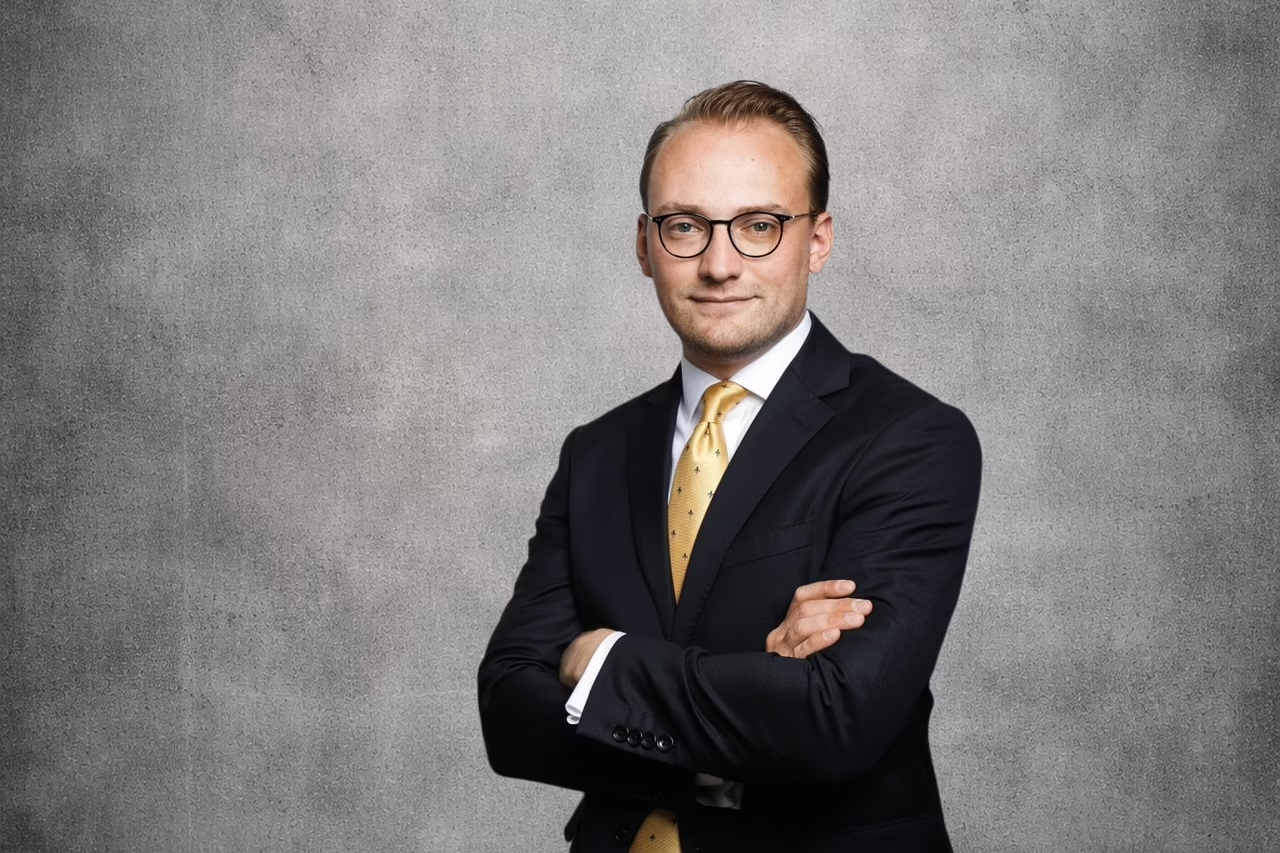
Otto Weidenkeller
Rechtsanwalt (attorney) | employed
T: +49 211 737547-70
E: weidenkeller@itmr-legal.de