Lawyer for copyright law: licences, Abmahnung, enforcement
For creatives, rights holders and companies – drafting licences, sending or defending against Abmahnungen (formal warning letters), resolving platform cases.

Copyright law for exploitation, conflicts and clear decisions
From Düsseldorf, ITMR Rechtsanwälte advises nationwide on copyright law – with a Fachanwalt für Urheber- und Medienrecht (certified specialist lawyer for copyright and media law) – on licences, chains of title, Abmahnungen (formal warning letters), einstweilige Verfügungen (preliminary injunctions) and platform cases.
Do you want to exploit content, software, images, music, film assets or editorial work in a legally secure way? Or do you have to react immediately to an Abmahnung, an einstweilige Verfügung or platform cases? Then you do not need a general introduction. You need a clear solution for licences, chains of title, taking action or defence.
If your works are used without permission, we take care of enforcing your rights – from the Abmahnung (formal warning letter) through to court proceedings.
We advise companies, entrepreneurs, start-ups, agencies, platform operators, publishers, media houses, professional rights holders and other commercially oriented market participants. What counts is exploitation, provability and commercial leverage. The central question is how creative work can be used, defended or enforced without being blocked later.
- Focus on B2B and rights holders
- Licences and chains of title
- Abmahnung and urgent legal protection
- Platform and exploitation conflicts
You are in the right place if
- a commercially relevant asset is to be used, scaled, rolled out internationally or set up anew,
- a contract does not cleanly cover the actual use or a chain of title must hold up under pressure,
- an attack is to be prepared, a takedown substantiated or a copyright allegation effectively defended.
Responsible for content: Jean Paul P. Bohne, Fachanwalt für IT-Recht (certified specialist lawyer for IT law), Fachanwalt für Urheber- und Medienrecht (certified specialist lawyer for copyright and media law), AI Officer (DEKRA), reviewed on 23 October 2026 (German version)
Quick start: what is your matter about?
Check chain of title and licences
Regulate types of use, territories, adaptation and sublicensing in a robust way.
Received an Abmahnung (formal warning letter)?
Secure deadlines, sign nothing unexamined and determine the defence.
Stop use immediately
Prepare urgent legal protection for running campaigns, platform copies or launches.
Check image rights and AI assets
The asset check provides initial guidance on the chain of title for images, graphics and AI motifs.
Help with filesharing Abmahnungen (warning letters)
Abmahnung, Mahnbescheid (court order for payment) or lawsuit over a file-sharing network: check the deadline, the claim and the Unterlassungserklärung (cease-and-desist declaration).
Send Abmahnungen for infringements yourself
Stop third-party copies of your own works: examine the infringement, secure evidence and assert claims in a targeted way.

Your contact: Jean Paul P. Bohne, LL.M., MM
Partner, certified specialist lawyer for copyright and media law and for IT law (Fachanwalt für Urheber- und Medienrecht, Fachanwalt für IT-Recht).
What happens after your enquiry?
After your enquiry, we will get back to you within 24 hours on working days. The first contact is free of charge. Before any costs arise, we will expressly inform you.
- A short description is enough. Briefly describe the work concerned, the use and your goal. Contracts, releases, locations found online, screenshots and, in the case of an Abmahnung, the letter with its deadline are helpful.
- Receipt and initial sorting. We assess the enquiry on the basis of the project described, the documents and the apparent goal. Deadlines and dates should be clearly recognisable.
- Suitable starting point and cost range. We clarify whether an initial consultation, a service package or a specific mandate is the next step. As soon as the scope of the review is clear, we tell you the cost range – before work begins.
In brief
Copyright arises with the personal intellectual creation. For companies, the decisive factor is usually the chain of title, i.e. whether the actual use has been effectively granted and reliably documented.
Typical cases from our copyright practice
We regularly encounter the following constellations. They are abstracted and simplified. Which solution works always depends on the work, the chain of title, the contract and the use.
DefenceAbmahnung with Unterlassungserklärung
- Starting point
- A company receives an Abmahnung because of an image on its website. Enclosed is a pre-drafted Unterlassungserklärung (cease-and-desist declaration) with a short deadline.
- Key difficulty
- Protectability, Aktivlegitimation (standing to sue), the licence situation and the scope of the requested declaration must be clarified. The image must not be deleted without securing evidence.
- Our work
- We secure deadlines and locations, examine the chain of title and claims and prepare the response.
- Work result
- A coordinated response and, where appropriate, an amended Unterlassungserklärung.
Simplified example.
EnforcementOwn content copied on a platform
- Starting point
- A rights holder finds their content on a platform and at a competitor. The use continues during the rights holder's own campaign.
- Key difficulty
- The work, rights holder, location, time and availability must be documented reliably. Only then can the first measure be chosen.
- Our work
- We secure evidence and weigh notice-and-takedown, Abmahnung and urgent proceedings against each other.
- Work result
- A documented body of evidence and a plan for a platform report, Abmahnung or einstweilige Verfügung.
Simplified example.
Work sample
Campaign grows beyond the contract
A company first uses agency motifs on its website. Later, the same motifs run on social media, in paid media and in further countries. The actual difficulty: the agency contract describes only part of this use. Whether the agency was allowed to pass on the photographers' rights in full is unclear. We examine authors, grants of rights and types of use and show where adaptation, territories or sublicensing need to be added. Result of our work: an overview of the gaps in the chain of title and coordinated follow-up licences.
The scenario is anonymised and simplified; it describes how we work, not the outcome of any specific proceedings.
What you will have at the end
| Service | Concrete result | Next step |
|---|---|---|
| Check chains of title | Overview of authors, grants and open types of use | Send contracts and releases |
| Design licensing models | Licence agreement covering channels, territories, adaptation and indemnity | Describe the planned use |
| Enforce claims | Securing evidence, platform report or Abmahnung | Submit locations and screenshots |
| Defend against allegations | Assessment of claims and response to the opposing party | Forward letters and deadlines |
| Urgent legal protection | Application for an einstweilige Verfügung | Briefly describe the urgency |
| Ongoing support | Fixed contacts for production, purchasing and licensing | Arrange a conversation about your needs |
When copyright becomes commercially critical
Copyright rarely becomes expensive because someone does not know the theory. It becomes expensive when operational use, contract, platform logic and chain of title no longer match.
The chain of title does not cover the actual use
Assets move from the website to social media, paid media, platforms, press, product communication or international roll-outs. The original contract often describes only part of this exploitation.
Conflicts escalate under time pressure
An Abmahnung, a block, a notice, an Unterlassungserklärung or an imminent launch window force quick decisions. Those who react without securing evidence or without considering Aktivlegitimation (standing to sue) often give away the better position.
Productions with many contributors become confusing
Agencies, freelancers, authors, photographers, developers, production companies or creators deliver exploitable work. Origin, adaptation, releases and scope of use are spread across several parties.
Investors, buyers or partners demand reliable proof
In financings, asset deals, catalogue exploitation, platform cooperations or long-term distribution models, a loose contract archive is not enough. What is needed is a verifiable, consistent legal position.
In a corporate context, copyright is an exploitation issue and a pressure issue at the same time. Those who organise the structure early negotiate from a stronger position and react faster. They reduce the risk that commercially valuable assets are blocked at precisely the decisive moment.
When you need us
The relevant cases rarely revolve around a single work only. They are usually shaped by the combination of use, contract, platform, timing and intensity of the conflict.
Contributions from agencies, freelancers or authors are built in but not properly secured in legal terms
When creation, acceptance and exploitation diverge, the scope of the creative work is often in dispute. For in-depth contract work, licensing and rights clearance leads you more directly to a robust solution.
Use of images, texts, music or film grows beyond the original purpose
A local use turns into cross-platform, international or group-wide exploitation. As soon as use, adaptation and secondary exploitation drift apart, a need for clarification almost always arises.
The opposing party demands Unterlassung (cessation), information or damages
What then matters is protectability, entitlement to claims, evidence, the extent of use and the tactical sequence. For immediate defence, defence against Abmahnungen is the direct route.
Your own rights are to be enforced quickly and noticeably
A use is to be stopped, a platform listing removed or pressure built up for a settlement, licence or Unterlassung. This requires a well-considered combination of securing evidence, notice, Abmahnung and, where necessary, urgent proceedings.
Software, code or third-party components shape the case
In that case, the software-specific deep dive via open source law is often the quickest entry point. If supply chains, licence obligations or product distribution are the core problem, IT law will help further.
International distribution and platform exploitation need more than standard clauses
Territories, sublicensing, archive use, translations, adaptations and indemnities must be addressed explicitly. Otherwise the legal position blocks commercial expansion precisely where exploitation is supposed to grow.
The most common misconception in companies: an existing contract is confused with a sound legal position. Many cases fail because of imprecise types of use, missing documentation, unclear releases or unregulated adaptation.
How we specifically support you in copyright law
A legally correct sentence alone is rarely the goal of a mandate. What matters is how exploitation is secured, an attack effectively built up, an allegation contained or a commercially critical asset made usable.
Check chains of title and make them exploitable
We clarify who the author is and who can be the rights holder or merely a licensee. We examine which grants have been effectively documented and where adaptation, territories, channels or sublicensing need to be added.
Design robust licensing models
From a single asset to a complex content portfolio, this concerns exclusive or non-exclusive licences, scope of use, international distribution, indemnities and commercially clean follow-on exploitation. For in-depth contract work, licensing and rights clearance leads directly to the appropriate next step.
Enforce claims
Where the legal position is clear, we support you from securing locations and evidence through platform reports and Abmahnungen sent by a lawyer to Unterlassung (cessation), information, damages and the einstweilige Verfügung (preliminary injunction).
Defend against allegations
Not every Abmahnung holds up. Protectability, Aktivlegitimation, licence situation, statutory limitations, depth of use and contractual penalty risks must be assessed properly under time pressure. The direct urgent route for this is defence against Abmahnungen.
Support copyright as an ongoing management task
Those who continuously produce, purchase, distribute or license content often need reliable in-house proximity rather than a one-off service. For this, the outsourced legal department can make more commercial sense than a series of isolated individual mandates.
Properly classify communication and publication cases
Sometimes publication, reporting, reputation protection or a communication crisis dominate the case rather than the use of a work. In that case, media law leads more quickly to the actual problem.
- Close to a dispute: send a targeted Abmahnung
- Time-critical: prepare urgent proceedings
- Ongoing support: set up permanent legal support
- Direct entry: request a mandate
Work, protection and chain of title: what mandates actually depend on
In copyright law, the specific creative expression is protected; the mere idea remains free. For companies, however, a case more often turns on the chain of title than on the abstract concept of a work.
The author (Urheber) is the natural person who created a work. Companies are therefore, as a starting point, rather commissioning parties, employers, rights holders, licensees or exploiters. After the initial classification, what matters most for clients is whether the relevant use has been effectively granted, documented and is robust for the actual exploitation.
This concerns, for example, adaptations, edited versions, subtitles, short versions, translations, new campaigns, platform uploads, archive use, internal multiple use, sharing within a group or integration into new product and distribution models. It is precisely at these transitions that costly gaps arise.
Checklist for the chain of title
These points should be clarified first
- Who provided the specific creative work?
- Who was entitled to grant rights of use in it?
- Which types of use are expressly covered?
- Have adaptation, sublicensing and transfer been taken into account?
- Will the documentation also hold up in disputes and platform procedures?
These assumptions particularly often lead to conflicts
- “Paid for” does not automatically mean “comprehensively licensed”.
- “Findable online” does not mean “free to use”.
- A “buy-out” does not replace a precise description of actual use.
- “Our own team” does not replace a clear allocation of rights and releases.
The 5 most common breaks in the chain of title
- The work does not originate from the party that granted the rights. An agency, freelancer, photographer, developer or production partner delivers the work. However, the contracting party was not entitled to release the relevant use at all, or not in full.
- The types of use are narrower than the actual exploitation. Website, social media, paid media, platforms, press, archive or international distribution continue, although the contract covers only part of this use.
- Adaptations and further developments have not been taken into account. Shortened versions, translations, subtitles, new edits, remixes, campaign adaptations or AI-assisted edits are used. However, the chain of title has not been robustly prepared for this.
- Sublicensing, transfers within a group or agency chains break down. An asset moves between companies, agencies, platforms or distribution partners without transfer, sublicensing and responsibility having been regulated precisely.
- The documentation does not hold up in a dispute. In everyday business, the use appears plausible. In platform proceedings, in the case of an Abmahnung or in court, robust releases, versions, dates, sources or proof of the specific chain of title are then missing.
Setting up licences and international use robustly
The more assets are scaled, adapted, distributed across platforms or exploited in several countries, the less a blanket grant of rights is sufficient.
A strong licensing architecture describes more than whether something may be used. It determines in what form, in which channels, for what duration and in which territories the use takes place. It also governs through which companies, with which adaptations and under which indemnity mechanisms the use remains commercially viable.
Licensing questions that are often underestimated
- Does the agreement really cover website, social media, paid media, press, platforms and archive use?
- May content be shortened, remixed, localised, dubbed, re-edited or combined with third-party material?
- Are group use, agency chains and sublicensing properly regulated?
- Who bears the risk if third-party rights, credits or sources have been recorded incompletely?
When the deep dive via licensing gets you there faster
If the commercial scope of a use is the focus rather than protectability or infringement, the deep dive via licensing and rights clearance leads more quickly into contract-related detail. There, productions, advertising materials, audio, film, music and complex chains of title are much more in focus.
Those who are mainly struggling with software distribution, libraries or source code obligations will find the more specialised answer via open source law or IT law.
Practical rule for exploitation teams: the more valuable an asset, the more dangerous an imprecise licence. International distribution, platform exploitation, adaptation, multiple exploitation and a later change of strategy should already be considered in the original contract.
Abmahnung, einstweilige Verfügung and court pressure
When rights are infringed or an allegation is received, the sequence of steps is decisive. Volume helps little. In copyright law, evidence, deadlines, chain of title and negotiating tactics are particularly closely intertwined.
If you want to enforce your own rights
Then it is about locations, screenshots, technical availability, chain of title and urgency. It must be clarified whether a notice, Abmahnung, settlement, platform process or immediate urgent legal protection offers the greater leverage first. For operational enforcement, sending an Abmahnung and the einstweilige Verfügung can follow directly.
If you are confronted with an allegation
Then protectability, Aktivlegitimation, the licence situation, scope of use, statutory limitations, calculation of damages and the implications of an Unterlassungserklärung must be examined properly. The quickest entry point for this situation is defence against Abmahnungen.
What often goes wrong under time pressure
Pre-drafted Unterlassungserklärungen are signed without examination, content is deleted without securing evidence or a chain of title is only examined after deadlines are already running. With launches, viral publications and running campaigns, this often costs more than the original allegation.
In brief
With an Abmahnung and urgent proceedings, the sequence matters: first secure deadlines and evidence, then examine the chain of title and claims, and only then decide on defence, settlement or attack.
Platform cases, takedowns and digital escalation
Platform cases rarely follow only the logic of classic civil proceedings. In addition to substantive copyright law, platform terms, reporting systems, verification requirements and international escalation paths affect the same facts.
YouTube, social media platforms, marketplaces, app environments, hosting services or international content infrastructure may be affected. For effective steps, the work, rights holder, grant of rights, location, time and availability must be properly documented. Only then can it be assessed whether notice-and-takedown, contractual leverage, an Abmahnung or court pressure is the better first measure.
With international platforms, the Digital Millennium Copyright Act (opens in a new tab) may also play a role as a platform-specific process. However, it does not replace the substantive examination. That is why a robust basis of evidence and rights always comes before the escalation step.
Artificial intelligence as an interface
If training data, closeness of output, tool terms or the question of human creative contribution shape the case, the mandate overlaps with AI law. For the copyright focus, what remains decisive here is whether a protectable work, a sound chain of title or a specific use can be proven in a legally robust manner.
Finding the more specialised deep dive
Not every content, platform or IP topic is primarily general copyright law. Those who find the actual focus page early save time and reduce friction.
Image and photo law
If image releases, identifiable persons, social media assets, employee photos, image archives or AI image workflows dominate the situation, you will reach the relevant answers there more quickly. For images, graphics and AI-generated motifs, the asset check for image rights provides initial guidance on the chain of title.
Music law
Where label, artist, producer, streaming or exploitation issues in the music business are central, the industry-specific perspective is decisive. On sampling, since the judgment of the Bundesgerichtshof (BGH, Federal Court of Justice) of 3 September 2026 the pastiche standard applies, explained in the article Metall auf Metall: BGH allows sampling as pastiche (in German).
Film law
If production chains, audiovisual projects, formats, chain of title and distribution make up the actual work, the better entry point is there.
Publishing law
For book, audio, subsidiary rights, e-book and publication models, the route via publishing law is more focused in content than a broad copyright review.
Open source law
As soon as third-party components, copyleft obligations, release documentation or software distribution become decisive, this is the more specialised deep dive.
Media law
If publication, reputation protection, reporting, interviews, corporate communication or personality rights form the axis, media law leads closer to the core of the problem.
Further insights (articles in German)
Key terms in copyright law
- Werk (work)
- A specific personal intellectual creation. The creative expression is protected; the mere idea remains free.
- Urheber (author)
- The natural person who created a work. Companies are, as a starting point, commissioning parties, employers, rights holders, licensees or exploiters.
- Nutzungsrecht (right of use)
- The authorisation granted by the author or rights holder to use a work in specific ways, either non-exclusively or exclusively.
- Chain of rights
- The provable sequence of grants of rights from the author to the exploiter, which must cover the actual use.
- Aktivlegitimation (standing to sue)
- The entitlement to assert claims arising from a work oneself.
- Buy-out
- A blanket grant of rights in return for a one-off fee. It does not replace a precise description of the actual use.
- Unterlassungserklärung (cease-and-desist declaration)
- A declaration to refrain from a challenged use in future, usually combined with the risk of a contractual penalty.
- Notice-and-takedown
- Reporting an infringement to a platform with the aim of having the content removed.
The terms explain the language used on this page. The specific contract and the individual case always remain decisive.
Provisions and reliable external sources
The following sources help with classification, examination of claims and further reading.
| Provision | Content | Practical significance |
|---|---|---|
| Section 2 UrhG (opens in a new tab) | Concept of a work | Basis for the question of whether a piece of work is protected. |
| Section 31 UrhG (opens in a new tab) | Grant of rights of use | Benchmark for licences and chains of title. |
| Section 97 UrhG (opens in a new tab) | Injunctive relief and damages | Claims in the event of infringements. |
| Digital Millennium Copyright Act (opens in a new tab) | Platform-specific process in the USA | May play a role with international platforms. |
Frequently asked questions about copyright law
The following answers give companies and other professional market participants a reliable initial orientation. For a sound assessment, the work, chain of title, contract, use and commercial goal of the individual case remain decisive.
When does copyright arise in a company?
No contract or copyright notice is required. Copyright arises with the personal intellectual creation of the work. In a company, it must then be clarified who the author is and which rights of use have passed to the commissioning party, employer, group companies or exploiters. ITMR Rechtsanwälte examines this chain of title.
Is a buy-out or standard contract sufficient for every use?
No. What matters is which types of use, territories, channels, adaptations, sublicences and archive uses are actually described. International campaigns, platform uploads, later rebrandings and group uses in particular often exceed blanket clauses faster than expected. ITMR Rechtsanwälte compares the contract with the actual use.
What should happen first after a copyright Abmahnung?
Secure deadlines, document locations and communication, sign nothing unexamined and do not delete content without a plan. Only after examining protectability, chain of title, licence situation, entitlement to claims and the scope of the Unterlassungserklärung should a decision be made on defence, settlement or counter-attack. ITMR Rechtsanwälte carries out this examination.
When is an einstweilige Verfügung (preliminary injunction) worthwhile?
When an ongoing use must be stopped immediately and the evidence and urgency are sufficient. This applies, for example, to running campaigns, viral publications, product launches, platform copies or impending market confusion. Whether urgent legal protection is possible and commercially sensible depends on the individual case. ITMR Rechtsanwälte assesses this before the application.
What is particularly important in platform cases and takedowns?
Works, chain of title, locations, screenshots, times and contacts must be documented in a way that preserves evidence. It must then be decided whether a platform notice, a contractual escalation route, an Abmahnung or court action offers the greater leverage first. With international platforms, platform-specific procedures may play a role in addition to German law. ITMR Rechtsanwälte chooses the first step with you.
How are artificial intelligence and copyright currently to be assessed?
Only the starting point is certain: purely machine-generated results are not automatically protected as a work. With training data and output-related infringements, much depends on the individual case. For companies, tool terms, human creative input, the origin of the data, documentation and contractual risk management are therefore decisive. ITMR Rechtsanwälte advises on this together with its AI law practice.
Secure your use now or pursue the conflict decisively
Whether licences need to be added, chains of title organised, platform cases escalated or an Abmahnung assessed under time pressure: in copyright law, the right sequence of steps is often the decisive advantage. We support you nationwide in the protection, licensing and enforcement of creative assets. In doing so, we keep exploitation, litigation risk, evidence and the commercial logic of the mandate in view.
Responsible lawyers at ITMR
Copyright law requires combining chain of title, exploitation, platform logic and litigation strategy. Jean Paul P. Bohne, LL.M., MM is a Fachanwalt für Urheber- und Medienrecht (certified specialist lawyer for copyright and media law) and a Fachanwalt für IT-Recht (certified specialist lawyer for IT law). He is the natural choice for licensing architecture, platform cases, enforcement, defence and commercially sensitive chains of title. Emma-Marie Kürsch offers strong support on copyright contract and exploitation issues with links to image and photo law, publishing law, trademarks and market-oriented content use. Otto Weidenkeller is the right contact for digital conflicts at the interface of copyright, social media, platform logic, e-commerce and contentious online use.
Legal status: 23 October 2026. This overview provides initial orientation and does not replace a review of the specific case.
Responsible for content: Jean Paul P. Bohne, Fachanwalt für IT-Recht (certified specialist lawyer for IT law), AI Officer (DEKRA), reviewed on 23 October 2026 (German version)
Responsible lawyer for copyright law at ITMR
Jean Paul P. Bohne, LL.M., MM
Rechtsanwalt (attorney) | Partner | Business mediator
- Fachanwalt für Urheber- und Medienrecht (certified specialist lawyer for copyright and media law)
- Fachanwalt für IT-Recht (certified specialist lawyer for IT law)
- AI Officer [DEKRA]
- Certified Information Privacy Professional/Europe [CIPP/E]
- Cert. Information Privacy Manager [CIPM]
- External data protection officer [TÜV]
- Data protection officer [TÜV]
- Data protection auditor [TÜV]
- IT compliance manager [TÜV]
T: +49 211 737547-70
E: bohne@itmr-legal.de

Emma-Marie Kürsch
Rechtsanwältin (attorney) | employed
T: +49 211 737547-70
E: kuersch@itmr-legal.de
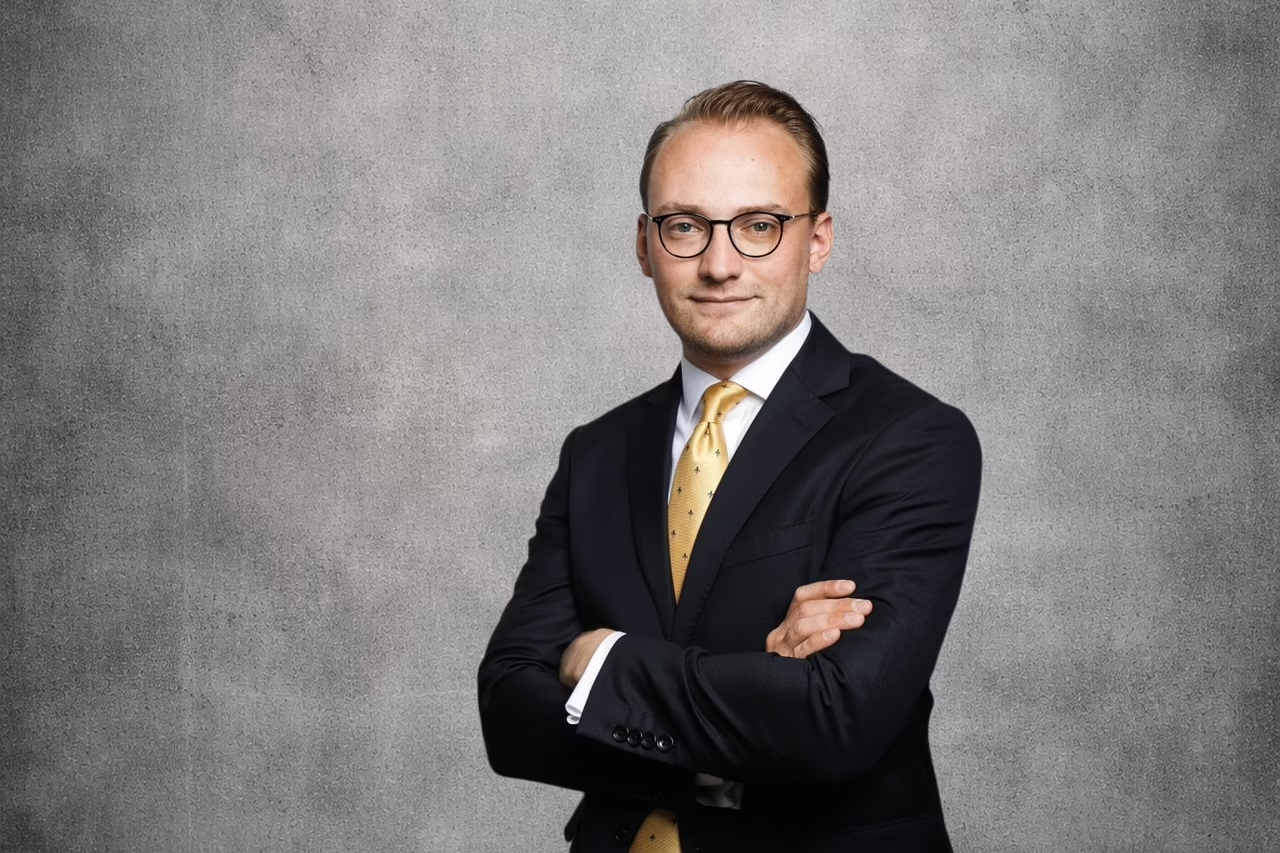
Otto Weidenkeller
Rechtsanwalt (attorney) | employed
T: +49 211 737547-70
E: weidenkeller@itmr-legal.de